Source: Textron Aviation / USDA APHIS • 2026
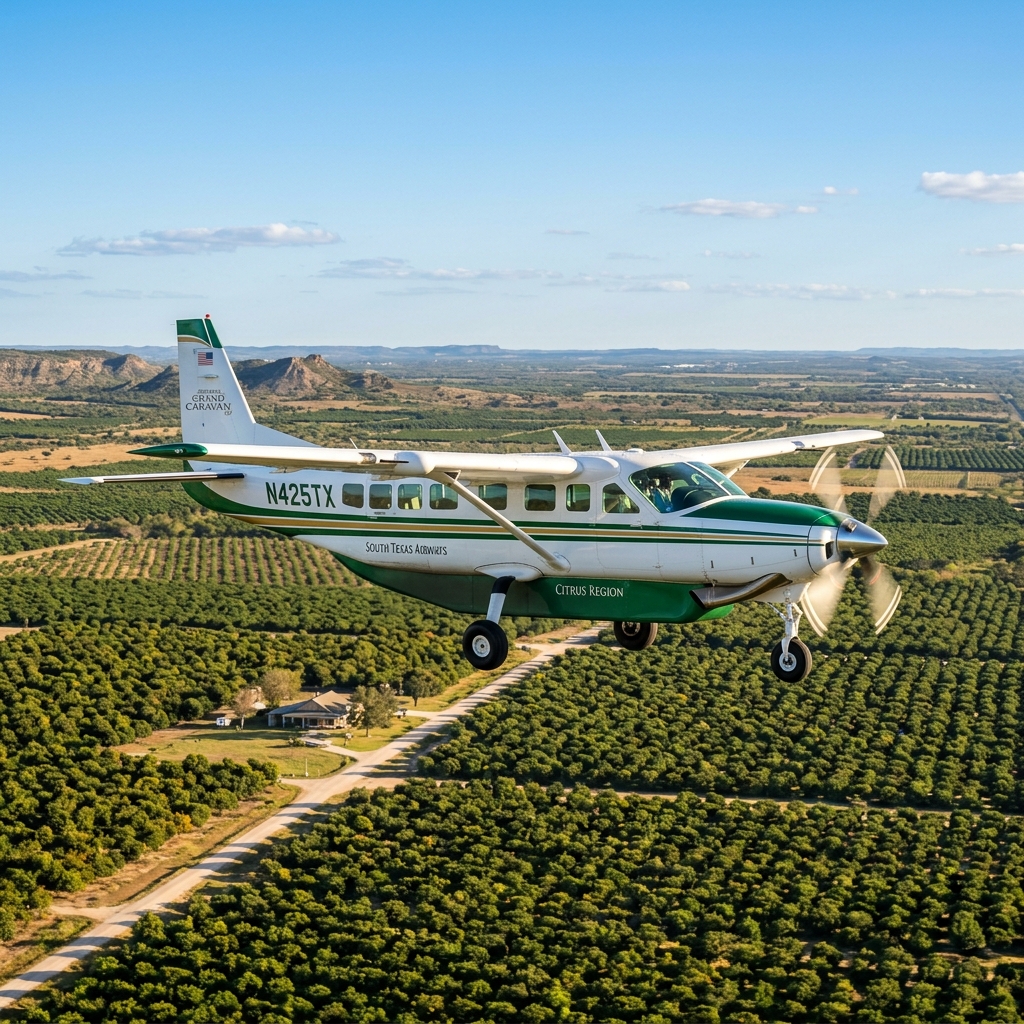
The U.S. Department of Agriculture (USDA) Animal and Plant Health Inspection Service (APHIS) has finalized an order for three Cessna Caravan 208 aircraft to support its critical agricultural protection programs. These aircraft will be stationed in southern Texas and utilized primarily along the Rio Grande River valley.
The primary mission of these new aircraft is the sterile insect release program, a highly successful pest-control technique that releases sterile fruit flies and other insects to suppress wild populations without using chemical pesticides. This environmentally safe approach protects vital citrus crops and the broader Texas agricultural industry from devastating fruit fly infestations.
APHIS currently utilizes smaller Cessna Stationair aircraft for these runs. Upgrading to the Cessna Caravan represents a major operational leap, providing much greater payload capacity, longer flight endurance, and a robust design capable of operating from short, unpaved runways near the border. Deliveries are scheduled to begin in 2027.
The Cessna Caravan's proven PT6A-114A turboprop engine and high-wing design make it exceptionally well-suited for low-altitude agricultural survey and dispersal flights. With a useful load exceeding 3,500 pounds and an operational ceiling of 25,000 feet, the Caravan can cover vast tracts of farmland in a single sortie while carrying significantly more sterile insects per flight than its predecessor aircraft. APHIS estimates this capacity increase could improve treatment efficiency by up to 40 percent across the lower Rio Grande region.
This procurement also reflects a broader federal investment in biosecurity infrastructure. APHIS has been expanding its Sterile Insect Technique (SIT) programs across multiple states in response to rising pest invasion threats linked to climate change and increased international trade. The Caravan's exceptional reliability and low maintenance costs per flight hour make it a cost-effective choice for government agencies operating on tight budgets while protecting an agricultural industry valued at over $100 billion annually in Texas alone.
An Air Nation Group Company
Source: Textron Aviation • 2026
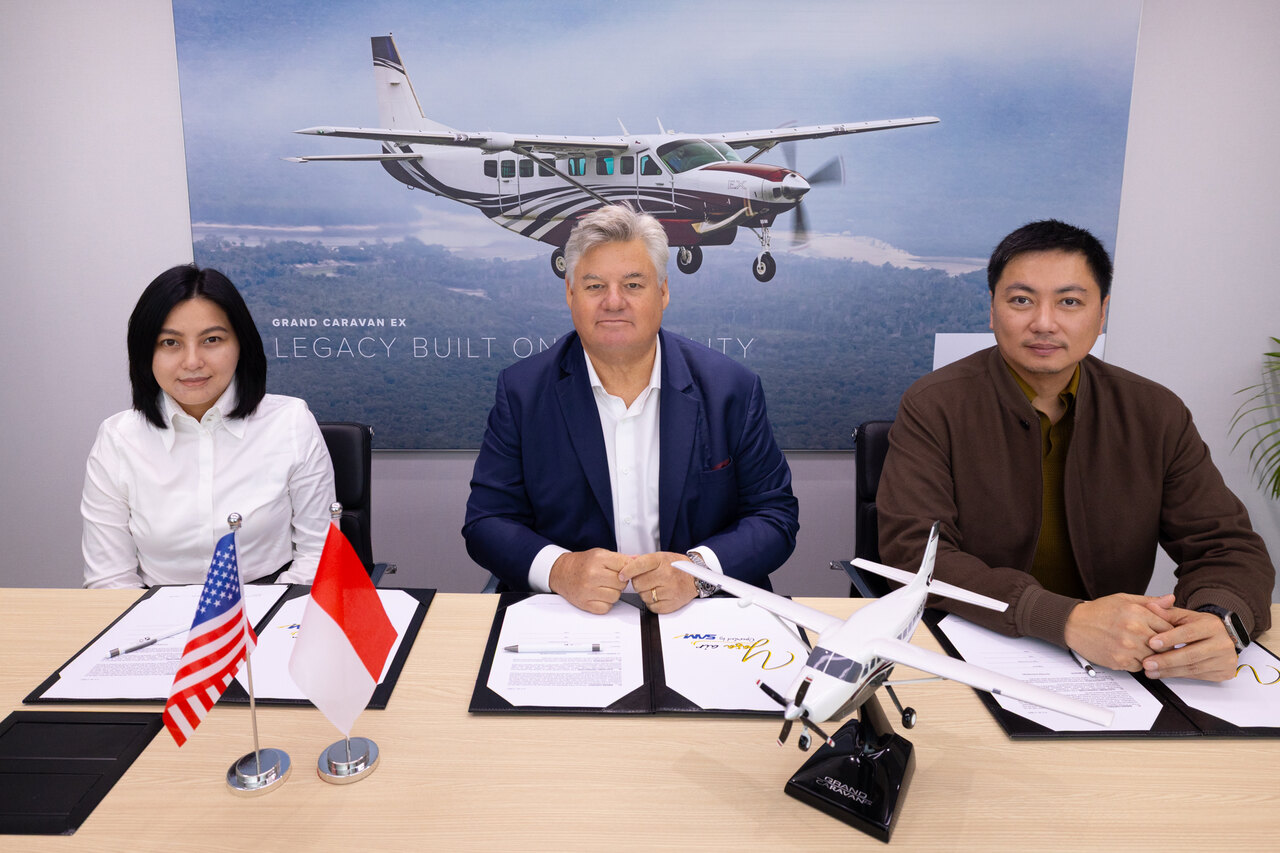
Indonesian regional operator PT Semuwa Aviasi Mandiri (SAM Air) has signed a purchase agreement for a new Cessna Caravan 208 to expand its domestic fleet. The aircraft will be deployed in specialized operations across the Indonesian archipelago, supporting regional connectivity and remote community service.
SAM Air intends to utilize the Caravan's legendary versatility for a wide variety of missions, including essential passenger transport, cargo and logistics delivery, and advanced weather modification projects. Its ability to access extremely short, unpaved runways makes it the ideal workhorse for Indonesia's rugged mountainous terrain and isolated islands.
Textron Aviation expressed pride in supporting SAM Air's mission, noting that the Caravan's unmatched reliability and low operating costs continue to make it the premier choice for regional transportation and remote operations worldwide.
Indonesia's vast archipelago — spanning over 17,000 islands across three time zones — presents unique aviation challenges that the Cessna Caravan is uniquely equipped to handle. Many remote communities in Papua, Kalimantan, and Sulawesi depend entirely on small aircraft for supplies, medical evacuations, and government services. SAM Air's new Caravan will feature a cargo pod configuration capable of hauling essential goods to communities where road access is nonexistent and maritime transport is unreliable during monsoon seasons.
The Indonesian aviation market has become one of the fastest-growing Caravan markets in the world, with over 80 Cessna Caravans currently registered in the country. Operators range from scheduled regional airlines to specialized cloud-seeding and firefighting services coordinated by Indonesia's Agency for Meteorology, Climatology, and Geophysics (BMKG). SAM Air's expansion underscores the growing demand for rugged, single-engine turboprop platforms that can operate economically in high-humidity, tropical environments while maintaining exceptional dispatch reliability rates exceeding 99 percent.
An Air Nation Group Company
Source: Asia Aviation • May 2026
Namibian charter operator Bay Air Aviation has integrated the Cessna Caravan 208 into its active fleet, serving all domestic airports and expanding operations across the African continent. The aircraft's versatility has made it an indispensable asset for special operations.
Bay Air is deploying the Caravan extensively for critical medical evacuation (medevac) missions, bringing patients from remote rural regions to advanced hospitals in Windhoek. In addition, the aircraft supports logistics and personnel transport for the rapidly expanding Namibian offshore oil and gas exploration sector.
The Caravan's excellent hot-and-high performance and rugged landing gear allow it to operate safely from desert sand strips and unpaved runways. This makes it a perfect fit for Namibia's challenging operating environment, where reliability is a matter of life and death.
Namibia's vast Skeleton Coast and Kalahari Desert regions present some of the most demanding operating conditions for any aircraft. Daytime temperatures regularly exceed 40°C (104°F), and many landing strips are composed of compacted gravel or sand with no navigational aids. The Caravan's robust trailing-link landing gear absorbs the punishment of these rough surfaces, while its PT6A engine maintains full power output even at high density altitudes — a critical advantage when operating from airstrips situated above 5,000 feet in Namibia's central highlands.
Bay Air Aviation's medevac operations are particularly significant given Namibia's healthcare infrastructure challenges. With only a handful of hospitals capable of performing advanced surgeries, the ability to transport critically ill or injured patients from remote mining camps, game reserves, and rural villages to Windhoek Central Hospital within hours can be life-saving. The Caravan's spacious cabin can be rapidly reconfigured to accommodate a medical stretcher, life-support equipment, and attending medical personnel while still maintaining the range to complete long-distance transfers without refueling.
The offshore oil exploration support role further highlights the Caravan's economic advantage. Compared to twin-engine alternatives, the single-engine Caravan offers dramatically lower operating costs per flight hour, enabling Bay Air to provide competitive crew-change and supply flights to the coastal staging areas serving Namibia's burgeoning Orange Basin oil concessions — one of Africa's most promising new petroleum provinces.
An Air Nation Group Company
Source: Skydive Magazine • 2026
The highly anticipated Kenya Boogie international skydiving festival utilized a Cessna Caravan as its primary jump ship, delivering spectacular high-altitude runs over the white sands of Diani Beach near Mombasa.
The aircraft transported groups of up to 13 skydivers to a jump altitude of 12,000 feet on every run. Jumpers from dozens of countries experienced breathtaking freefalls over the Indian Ocean before landing directly on the beach, highlighting the Caravan's excellent climb performance and jump-friendly cabin layout.
Skydiving operators consistently praise the Caravan for its rapid turn-around times, spacious cabin, and fuel efficiency. The Kenya Boogie highlighted the aircraft's global reputation as the gold standard for large-scale skydiving operations.
The Cessna Caravan's dominance in the skydiving world is no accident. Its large rear cargo door — measuring approximately 4 feet wide and 4 feet tall — allows skydivers to exit the aircraft quickly and cleanly, minimizing separation issues during formation jumps. The cabin can comfortably seat 13 jumpers with their rigs, and the Caravan's powerful climb rate of over 900 feet per minute means it can cycle from ground level to 12,000 feet and back in under 25 minutes, maximizing the number of loads a drop zone can run per day.
The Kenya Boogie 2026 attracted over 200 registered jumpers from more than 30 countries, including world-champion formation skydivers, wingsuit pilots, and tandem instructors. The event also featured night jumps, canopy piloting demonstrations, and coastal freefly sessions — all made possible by the Caravan's versatile and forgiving flight characteristics. Event organizers credited the aircraft's reliability as a key factor in completing every scheduled load without a single mechanical delay throughout the week-long festival.
For Skydive Diani, the operator running the Caravan at Kenya Boogie, the aircraft has become the economic backbone of their year-round tourism business. Diani Beach's growing reputation as an adventure-tourism destination means steady demand from both experienced skydivers and tandem first-timers, and the Caravan's low fuel consumption — burning approximately 60 gallons per hour — keeps ticket prices accessible while maintaining healthy profit margins.
An Air Nation Group Company
Source: Flying411 • 2026
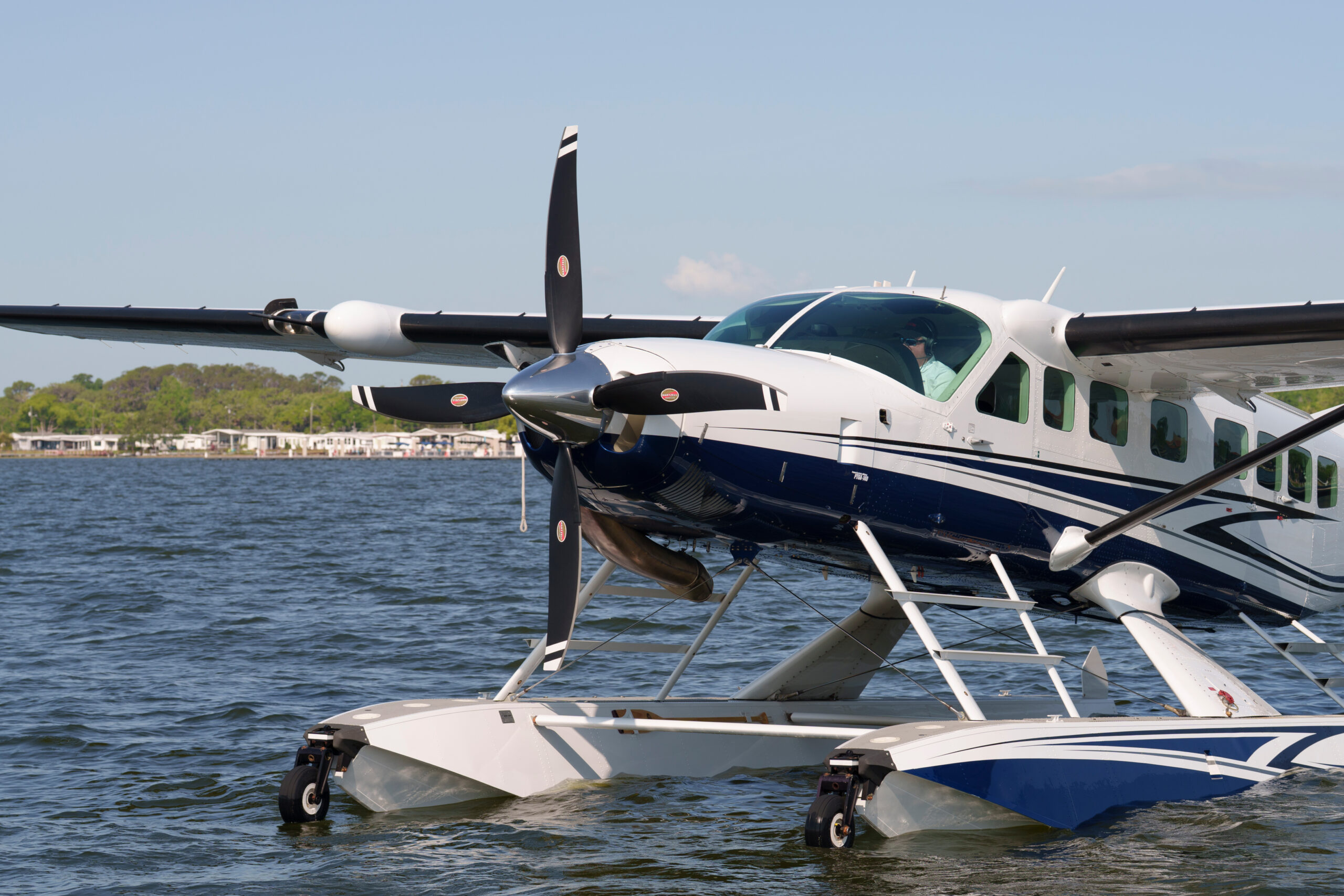
A comprehensive new guide to modern amphibious aviation has highlighted the Cessna Caravan Amphibian as the premier, most mature utility floatplane option available on the market today.
Equipped with specialized Wipaire Wipline floats, the Caravan Amphibian is widely praised for its exceptional payload, passenger comfort, and salt-water corrosion resistance. It remains the absolute workhorse of choice for remote luxury resorts, wilderness outfitters, and regional island flight departments.
The guide emphasizes that the Caravan's robust turboprop engine and factory-supported float integration provide unmatched reliability, making it the dominant platform in Alaska, the Canadian wilderness, the Maldives, and the Caribbean.
The Wipaire Wipline 8750 amphibious floats are the most popular float configuration for the Cessna Caravan, providing full amphibious capability — meaning the aircraft can operate from both water and paved runways without any modification between flights. The floats feature retractable landing gear, corrosion-resistant aluminum construction with sacrificial anodes for saltwater protection, and integrated fuel bladders that supplement the aircraft's main tanks for extended range. On floats, the Caravan can still carry up to 2,500 pounds of useful load, accommodating nine passengers and their luggage with room to spare.
In Alaska, the Caravan Amphibian has become the backbone of the bush flying industry. Operators like Regal Air, Rust's Flying Service, and K2 Aviation rely on float-equipped Caravans to transport fishermen, hunters, and eco-tourists to remote wilderness lodges accessible only by air or water. The aircraft's ability to land on glacial lakes, coastal bays, and rivers — and then taxi up a boat ramp onto a paved apron — eliminates the need for expensive dock infrastructure and dedicated seaplane bases.
The guide also highlights the growing demand for Caravan floatplanes in tropical island destinations. In the Maldives, Trans Maldivian Airways operates one of the world's largest seaplane fleets, ferrying resort guests between Malé International Airport and dozens of luxury overwater resorts spread across the archipelago's 1,190 coral islands. The Caravan's turbine reliability, salt-spray resilience, and air-conditioned cabin comfort make it the ideal aircraft for these premium tourist transfers, where passenger experience and operational dependability are paramount.
An Air Nation Group Company
Source: Flying Magazine • 2026
Wipaire's high-performance four-bladed composite Hartzell Yukon propeller has officially received expanded certification from the European Union Aviation Safety Agency (EASA) for Cessna Caravan float operations.
The Yukon propeller represents a massive upgrade for Caravan operators, reducing water takeoff rolls by up to 31% and significantly improving climb rates. These performance gains are highly critical for floatplane operations where water runways are limited or surrounded by high terrain.
With EASA approval finalized, European operators can now join carriers in the United States, Indonesia, and Saudi Arabia in utilizing the Yukon propeller to enhance safety and efficiency across their Caravan networks.
The Hartzell Yukon propeller achieves its remarkable performance gains through advanced composite construction and an optimized four-blade design. Each blade is significantly wider and features a more aggressive pitch profile than the standard three-blade McCauley propeller, converting the PT6A engine's shaft horsepower into thrust more efficiently. The four-blade configuration also reduces noise levels by approximately 3 decibels — a meaningful improvement for operators in noise-sensitive environments such as residential lakefront communities, national parks, and resort areas where floatplane traffic is common.
For float operators, the 31 percent reduction in water takeoff distance is transformative. In confined waterways, glacial lakes, and fjords — common operating environments in Scandinavia, Alaska, and British Columbia — shorter takeoff runs translate directly into expanded operational access and wider safety margins. Pilots report that the Yukon propeller also provides noticeably better single-engine climb performance in the event of a partial power loss, adding an extra layer of safety during the most critical phases of flight.
Wipaire, the South St. Paul, Minnesota-based company that develops and distributes the Yukon propeller alongside its popular Wipline float systems, has reported strong demand from European operators following the EASA certification. Scandinavian floatplane services, Scottish Highlands charter companies, and Mediterranean island operators have all placed orders. The propeller is available as both a factory option on new-production Caravans and as an aftermarket retrofit kit for the existing global fleet of over 3,000 Cessna Caravans.
An Air Nation Group Company
Source: ZipRecruiter • 2026
The latest pilot compensation data indicates that the average annual salary for Cessna Caravan captains in the United States has reached a record high of $130,916, reflecting intense hiring pressure across the industry.
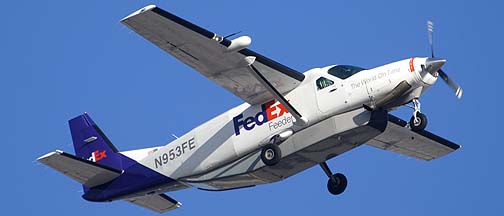
This upward trend is driven primarily by the ongoing pilot shortage and rapid expansion among regional express cargo feeders (such as FedEx feeders), fractional programs, and private charter departments. Caravan pilots are in high demand due to their extensive experience in single-pilot instrument flight rules (IFR) environments.
Experienced Caravan captains in major aviation hubs can command salaries exceeding $155,000 per year, as operators offer highly competitive pay, signing bonuses, and improved quality-of-life schedules to attract and retain talented aviators.
The salary data reveals significant regional variation across the United States. Caravan captains based in high-cost metropolitan areas like Miami, Los Angeles, and the New York tristate region report average annual compensation packages (including base salary, per diem, and benefits) approaching $165,000 to $175,000. Meanwhile, pilots operating in smaller markets such as the Mountain West or Great Plains states typically earn between $110,000 and $130,000, though many of these positions offer superior quality-of-life benefits including home-basing, predictable schedules, and significantly lower cost of living.
The Caravan captain role has become a particularly attractive career stage for pilots building turbine-in-command (TIC) time. Most major airlines and corporate flight departments require applicants to hold at least 1,000 to 1,500 hours of turbine PIC time, and the Caravan provides an ideal platform to accumulate this experience. Pilots flying express cargo routes for FedEx feeder operators like Empire Airlines, CSA Air, and Mountain Air Cargo often log 800 to 1,000 hours of turbine PIC time per year, making the Caravan one of the fastest pathways to airline-competitive resumes in the industry.
Beyond base compensation, many Caravan operators are sweetening their offers with retention bonuses, type-rating sponsorships, and guaranteed career progression pathways. Several major Part 135 operators now offer structured flow-through agreements that guarantee Caravan captains interviews at regional or major airlines after a specified period of service, creating a win-win model that helps smaller operators retain talent while providing pilots with a clear career roadmap.
An Air Nation Group Company
Source: CAE / Acumen • May 2026
A newly published civil aviation market outlook by training global leader CAE forecast a critical global demand for over 300,000 new commercial pilots and 1.46 million total aviation professionals by the year 2034.
The report highlights that the pilot shortage continues to represent a dominant challenge for regional airlines, corporate flight departments, and utility operators. Smaller turboprop carriers are feeling the hiring pressure most acutely as major airlines recruit their flight crews.
To combat this ongoing drain, utility turboprop operators are dramatically restructuring their compensation models, offering advanced pilot training pipelines, and improving scheduling structures to ensure a reliable flow of qualified captains for their Cessna Caravan fleets.
CAE's Aviation Talent Forecast breaks down the demand by region, revealing that Asia-Pacific will require the largest share of new pilots (approximately 99,000), followed by North America (65,000) and Europe (45,000). The report also identifies a growing need for maintenance technicians, cabin crew, and air traffic controllers, projecting that the total aviation workforce gap could exceed 1.46 million professionals across all disciplines. For the turboprop segment specifically, the shortage is particularly acute because single-engine cargo and commuter operations demand pilots with specialized skills in single-pilot IFR operations, short-field techniques, and adverse weather management.
The pilot shortage has already begun reshaping the career economics of turboprop aviation. Entry-level Cessna Caravan first officers — a position that barely existed five years ago due to the aircraft's single-pilot certification — are now being hired at some larger Part 135 operators as a training pipeline strategy. These operators invest in ab-initio programs that take newly certificated commercial pilots through intensive Caravan-specific ground school, simulator training, and supervised line flying before releasing them as fully qualified captains within 12 to 18 months.
Industry leaders have also called for regulatory reform to address the shortage. Proposals include reducing the ATP certificate hour requirement from 1,500 hours for structured training graduates, expanding access to simulator-based training credits, and creating international pilot licensing reciprocity agreements that would allow qualified foreign pilots to operate more easily in underserved markets. For Caravan operators, the stakes are enormous: every unfilled captain seat represents lost revenue, delayed cargo shipments, and communities cut off from essential air services.
An Air Nation Group Company
Source: Textron Aviation
Textron Aviation and Aeromot collaborate to develop an in-air openable jump/cargo door
for the Cessna Caravan.
July 10, 2025
Textron Aviation, in collaboration with Aeromot Aeronaves e Motores S.A., has announced a Cooperation Agreement to develop an in-air openable jump/cargo drop door for Cessna Caravan aircraft. The work will take place at Aeromot’s facility in Brazil.
Aeromot is an aeronautical technology company specializing in the sale of aircraft, parts and components, as well as maintenance and solutions for special missions. Under the agreement, Textron Aviation will provide technical and engineering data so that Aeromot can pursue a Brazilian Supplemental Type Certificate (STC) for the new door installation, issued by ANAC (Brazil's National Civil Aviation Agency).
Textron Aviation’s collaboration with Aeromot opens up new mission capabilities for Cessna Caravan operators worldwide. (Image: Textron Aviation)
The new door system is designed for in-air jump and cargo drop operations and is expected to be offered as a factory option for new production aircraft upon certification. This expanded capability will support a variety of missions, including skydiving, special cargo logistics, and other airborne operations.
“Brazil is home to over 200 Cessna Caravans, ranging from commercial operators to the Brazilian Air Force and State Police units,†said Bob Gibbs, vice president, Special Missions Sales, Textron Aviation. “This development will enhance Caravan capability not only in Brazil but for the global fleet.â€
The agreement will also support jobs in Rio Grande do Sul, Brazil, where Aeromot is headquartered.
An Air Nation Group Company
Source: Textron Aviation
Cessna celebrates milestone with more than 3,100 aircraft
delivered
March 31, 2025
Textron Aviation today announced that the company is celebrating the 40th anniversary of the Cessna Caravan single-engine utility turboprop with customers throughout the year, recognizing its growth and popularity throughout the world during the past four decades.
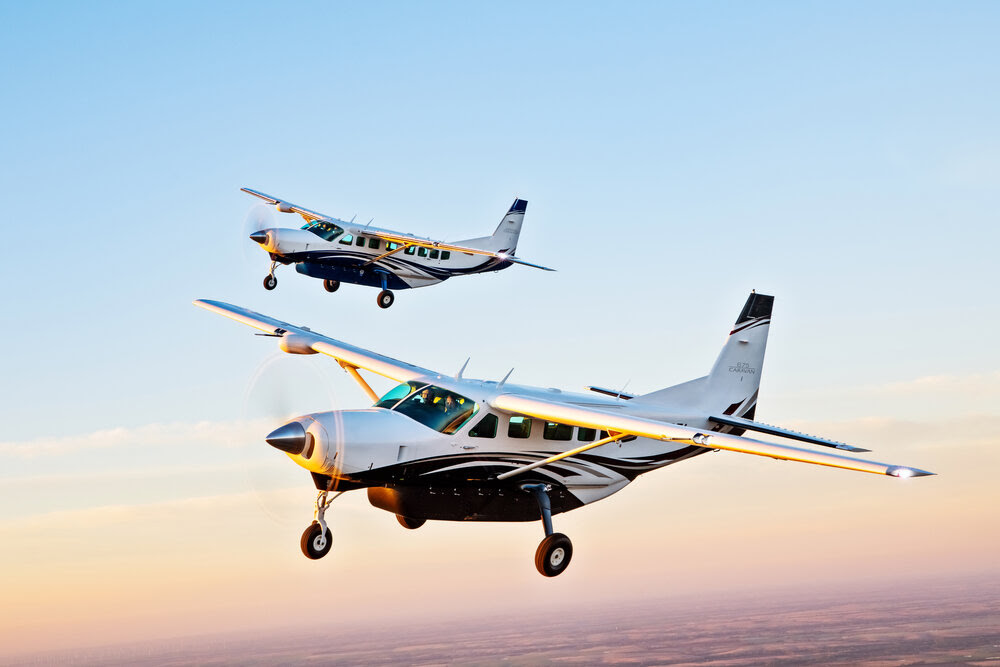
Cessna Caravan celebrates 40 years of adventures as one of the most versatile aircraft in the industry (Photo Credit: Textron Aviation).
The Cessna Caravan is designed and manufactured by Textron Aviation Inc., a Textron Inc. (NYSE:TXT) company.
“Customers continue to select the Caravan because of its great versatility to support a wide range of operations,†said Lannie O’Bannion, senior vice president, Sales & Marketing, Textron Aviation. “The aircraft can go almost anywhere—on water, off-the-grid backcountry and rough terrain without runways. Whether their mission is business, humanitarian or a great adventure, our customers rely on the Caravan to deliver them all around the world.â€
The Cessna Caravan platform, which also includes the Cessna Grand Caravan EX, has more than 3,100 aircraft delivered and is certified in 100 countries. The aircraft has accumulated over 25 million flight hours globally.
Textron Aviation remains dedicated to enhancing the Caravan's capabilities, ensuring it continues to meet the evolving needs of pilots, passengers and aviation enthusiasts across the globe.
The aircraft’s cockpit currently features Garmin’s G1000 NXi avionics with the latest technology and connectivity. A brighter, modernized flight deck with new backlit panels and other amenities is expected to enter into service in 2025.
Conceived as a rugged utility aircraft with low operating costs, the first Caravan delivery was celebrated in 1985. The aircraft is renowned for its ability to operate in remote areas with extreme weather changes, mountainous terrain and rough landing locations. Today, Caravans are seen being utilized by government agencies, law enforcement and militaries, air ambulance services, freight haulers, corporations and humanitarian organizations.
An Air Nation Group Company
Source: Radio Free Asia
The Z-9 routinely operates from Chinese warships
U.S. operator will convert Grand Caravan EX aircraft to hybrid-electric propulsion
By Greg Waldron
February 18, 2025
A Chinese navy Harbin Z-9 helicopter has conducted a dangerous intercept of a Philippine government Cessna 208B Caravan.
The 18 February incident saw the Z-9 approach as close as 3m (10ft) from the turboprop, which was carrying journalists above the Scarborough Shoal, a location in the South China Sea that is illegally claimed by China, according to Radio Free Asia.
According to a Philippine coast guard spokesman, the helicopter made two close approaches to the aircraft’s left side.
In video posted on social media, the Philippine Bureau of Fisheries and Aquatic Resources (BFAR) pilot is heard warning the Z-9 that it is too close, endangering the lives of the Caravan’s passengers and crew.
The standoff between the two aircraft lasted about 30min.
The incident came about a week after a People’s Liberation
Army Air Force Shenyang J-16 conducted a dangerous intercept of a Boeing P-8A operated
by the Royal Australian Air Force.
That incident also occurred in international airspace over the South China Sea. The 11 February intercept saw the J-16 release flares close to the P-8A, according to Australia’s Department of Defence (DoD).
Chinese aircraft have a long history of dangerous intercepts in international airspace.
Despite the recent Australian and Philippine incidents, China appears to have backed off from dangerous intercepts of US military aircraft after former US President Joe Biden raised the issue with Chinese ruler Xi Jinping during a November 2023 summit.
According to Cirium, an aviation analytics company, the BFAR operates a single 208B Caravan that it obtained in 2023. Curiously, the aircraft was assembled in the Chinese city of Shijiazhuang by a joint venture between Cessna and China Aviation Industry General Aircraft.
It served for six years with China’s Hai Au Aviation before the BFAR obtained it in May 2023.
The Z-9 is based on the Airbus Helicopters AS365 Dauphin. It routinely operates aboard Chinese warships, serving in the reconaissance, strike, and anti-submarine warfare roles.
Textron Aviation delivered four Cessna
Grand Caravan EX aircraft to Surf Air Mobility between November and December
2024.
U.S. operator will convert Grand Caravan EX aircraft to hybrid-electric propulsion
December 7, 2024
Textron Aviation has delivered four Cessna Grand Caravan EX aircraft to Surf Air Mobility, a regional air services group that is developing electrified powertrains to modify the single-engine utility turboprops. These deliveries mark the first four of 20 Grand Caravan EX aircraft that Surf Air Mobility ordered last year.
The Los Angeles-based regional operator signed a provisional sales agreement with Textron Aviation in 2021 that covered orders for up to 100 Caravans plus an option for another 50. Surf Air Mobility said it is financing two of the initial aircraft deliveries through operating leases with Japanese aircraft lessor ITC-AeroLeasing.
Surf Air Mobility is developing a hybrid-electric powertrain to replace the Pratt & Whitney PT6 turbine engines on the Grand Caravan, which would reduce fuel burn and operating costs. It expects to obtain an FAA supplemental type certificate for the Caravan retrofits in 2027. In the meantime, Surf Air Mobility will use the new Caravan “to renew its existing fleet, bolster its existing network, and launch new routes in regions across the country,†the company said in a statement.
“We’re excited to immediately deploy these first four Grand Caravans onto our network to further enhance the profitability of our airline operations,†said Surf Air Mobility CEO Deanna White. “With our fleet order with Textron Aviation, we’re continuing to deliver on our transformation plan as every new Caravan will increase our operational efficiency and provide an even better experience for our passengers.â€
In November, Surf Air Mobility secured a $50 million term loan from investment management firm Comvest Partners to help fund a four-phase “transformation plan†that the company hopes will boost profitability. The first phase of that plan involved changes to the company’s capital structure and management teams.
“We have fundamentally restructured our balance sheet—addressing our near-term liquidity
constraints, lowering our cost of capital, minimizing potential dilution under our equity share
subscription facility, and repositioning Surf Air Mobility for profitable growth,†said Surf
Air
Mobility chief financial officer Oliver Reeves. “We are now poised to optimize the structure
of
our business and capitalize on the opportunities before us.â€
For phase two of the transformation plan, slated for 2025 and 2026, the company aims to
optimize and “rightsize†its airline and on-demand operations with the help of its own SurfOS
operating system. According to a quarterly earnings report issued in November, on-demand
service revenue dropped by 13% in the past year. Phase three of the plan calls for route
expansion in 2026 through 2027. From then on, the company hopes to grow revenue by implementing
electrification technologies.
“As we enter the next phase of our transformation plan, we are focused on optimizing operations and capital allocation to meaningfully improve profitability in the near term,†White said. “As we look further ahead, phases three and four of our plan will allow us to become the technology-enabled platform best positioned to capture a significant share of the $75 billion global regional air mobility market.â€
Surf Air Mobility is the parent company of charter operator Surf Air and two regional Part 135 airlines, Florida-based Southern Airways Express and Mokulele Airlines in Hawaii. The regional aviation group hopes to make its operations and the greater aviation industry more sustainable by introducing electrified aircraft powertrains and related technologies, such as the SurfOS software.
In addition to modified legacy aircraft such as the Caravan, Surf Air Mobility is looking to bring new clean-sheet designs into its fleet. For example, it intends to operate up to 90 Electra hybrid eSTOL (electric short takeoff and landing) aircraft, which Electra aims to certify under FAA Part 23 rules in 2028. Surf Air Mobility has also committed to adding Regent’s wing-in-ground-effect seaglider to its fleet for coastal services in Hawaii, Florida, the Bahamas, and the Caribbean.
Dovetail Electric Aviation plans to
convert the Cessna Caravan to operate with a hydrogen-electric propulsion
system.
Norway's Skydive Voss, Dovetail Electric
Aviation and Scandinavian Seaplanes will conduct flight tests
October 22, 2024
Skydiving flights operator Skydive Voss plans to introduce electric aircraft to its fleet. Under an agreement announced on October 22, the Norwegian company has committed to a collaboration with propulsion system developer Dovetail Electric Aviation to convert several Cessna Caravan 208 single turboprops.
The partners have also agreed to explore options for converting other smaller piston-powered aircraft to electric propulsion, including models such as the Cessna 182 and 206. The powertrain will use MagniX's electric motors and batteries developed by Mobius Energy.
Flight testing of the first converted Caravan 208 is expected to take place by 2026, and will also involve Scandinavian Seaplanes. The companies involved aim to conduct these evaluation flights in a new designated test area in Norway that is being prepared by the country’s civil aviation authority and airport operator Avinor.
The provisional sales agreement makes Skydive Voss the second prospective customer for the Caravan electric conversion. Scandinavian Seaplanes has already announced plans to introduce the aircraft to its amphibious fleet.
In July, Australia-based Dovetail unveiled the first example of its 600-kilowatt hydrogen-electric powertrain. This propulsion system is intended for converting larger turboprop aircraft including the Textron's King Air, the de Havilland Otter and the Pilatus PC-12.
Also in July, during the Farnborough Airshow, the company agreed to provide battery packs for an eVTOL aircraft being developed by Spanish start-up Crisalion Mobility.
Cessna Caravan serial number
50—displayed by Azul Conecta, a feeder for Azul Airlines—is one of at least 26 of
the
utility turboprop singles that make Azul the country’s largest Caravan operator. ©
Richard Pedicini/AIN
Turboprop single is a workhorse in Latin
America
August 8, 2024
Two Cessna Caravans on display this week at LABACE 2024 illustrate Textron Aviation’s long relationship with Brazil and how varied the business aviation market is.
Caravan serial number 50—displayed by Azul Conecta, a feeder for Azul Airlines—is one of at least 26 of the utility turboprop singles that make Azul the country’s largest Caravan operator. With 35,000 flight hours and a new digital cockpit, this airplane is in an executive configuration with only six seats.
Meanwhile, at the stand of TAM Aviação Executiva, Textron Aviation’s Brazilian distributor, a modern Grand Caravan EX is being shown in an executive configuration, but with a far greater level of luxury.
Marcelo Moreira, who leads Textron Aviation’s sales for Latin America and the U.S. West Coast, said many airlines around the world fly Caravans besides Azul, including Suzy Air in Indonesia, CTA in Brazil, Sansa, Costa Rica Green Airways, and Maya Island Air in Belize. But, he noted, “Azul is exploring the [Caravan’s] capacity very well, its ability to operate on unimproved runways and to reach smaller cities.â€
Moreira gave other examples of the Caravan’s versatility and ability to perform special missions. A number of customers use amphibious Caravans in the Amazon “for many kinds of missions, such as sports fishing and ecotourism.†He said there are several large operators in Africa, where the Caravan is popular for cargo.
“It’s easy to operate, to maintain, and to fly,†Moreira said, “and also the choice of a lot of humanitarian organizations, such as Mission Aviation Fellowship.â€
Moreira’s Latin American sales region includes Mexico, the Caribbean, and all of South America. Besides the versatile Caravan, his sales domain includes King Air turboprop twins and Citation twinjets.
Textron’s relationship with Brazil goes back many years, “and with time comes experience,†he said. The 43-year partnership with TAM AE goes back to when it was TAM, starting with founder Rolim Adolfo Amaro. Any visitor can see Rolim’s bust outside TAM AE’s flagship FBO at Congonhas, but Moreira can point out where his office was in the building known as Hangar 1.
According to Moreira, Textron Aviation maintains a full-time presence in São Paulo “inside TAM, but a separate office.†He said the turboprops and Citations “have done well in Brazil for more than 50 years.â€
Looking to the future, he foresees a strong market for the company’s Beechcraft Denali, a pressurized turboprop single expected to be certified next year. It will complement the King Air, he said.
Moreira made another prediction for the future: Textron Aviation will continue for many years at LABACE.
FOLLOW THE NATION ON SOCIAL